
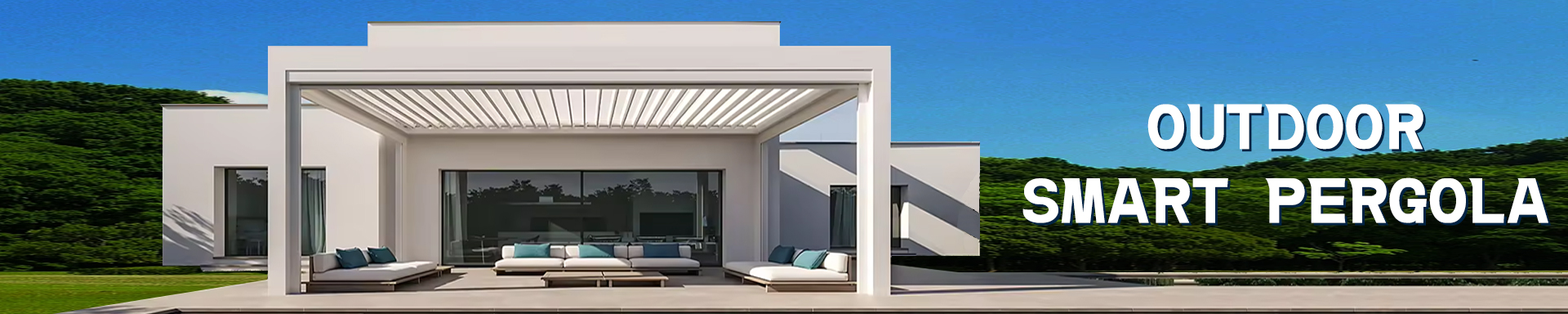
1. What Is a Motorized Louvered Pergola?
A motorized louvered pergola is an advanced outdoor shading system that allows you to control sunlight, ventilation, and rain protection with just a remote or smart app. The roof consists of aluminum louvers that tilt between 0° and 150°, driven by an electric motor hidden inside the frame. With one touch, the louvers rotate to block intense sun, provide shade, or seal tightly for rain protection.
Unlike fixed-roof pergolas, this system automatically adapts to changing weather conditions. In modern villas, hotels, and outdoor dining spaces, these pergolas create a functional yet stylish transition between indoor comfort and open-air living. Brands like Keenhai Pergola focus on integrating LED lighting systems, rain sensors, and waterproof drainage channels, ensuring all-season performance.
A high-quality Louvres Pergola typically comes with a built-in gutter system that redirects rainwater through internal posts, keeping the area completely dry. This innovation makes the structure not only weather-resistant but also a permanent architectural extension of the home.
1.1 How the Motorized Mechanism Works
The motorized system operates through a low-voltage linear actuator that connects directly to the louver panels. When activated via remote or wall switch, the actuator converts electrical energy into mechanical motion, tilting the louvers smoothly and silently.
Here’s a simplified breakdown of the process:
-
User Control Input: Remote, app, or wall switch sends a signal to the control unit.
-
Signal Transmission: The control box regulates the power flow to the motor.
-
Mechanical Motion: The actuator pushes or pulls the linkage arms, rotating the louvers.
-
Position Feedback: Built-in sensors detect blade angle and stop movement at the exact preset degree.
In premium systems like the Aluminum motorized pergola, the motor typically runs on 24V DC for safety and quiet operation. The rotation speed is optimized between 4–6 seconds per 90°, which offers a perfect balance between smoothness and responsiveness.
When rain sensors detect moisture, the louvers automatically close within 10 seconds, activating the drainage system underneath the frame. This “smart weather response” design not only enhances convenience but also prolongs the lifespan of outdoor furniture and flooring underneath.
1.2 Key Components and Materials Used
A motorized louvered pergola system is built with precision-engineered parts designed for long-term outdoor use. Each component serves a structural or functional role that affects performance, noise level, and waterproof rating.
| Component | Function | Typical Material | Technical Detail |
|---|---|---|---|
| Louvers | Adjustable roof blades | 6063-T5 powder-coated aluminum | 2–3mm thickness, UV-resistant coating |
| Frame Posts | Structural support | Extruded aluminum or stainless steel | Integrated drainage channel inside post |
| Actuator | Tilting mechanism | IP67 waterproof linear actuator | 24V DC, torque 120–180N |
| Control Unit | Power management and signal receiver | Aluminum housing, sealed electronics | Supports remote, app, and voice control |
| Gutter System | Drainage and water collection | Aluminum with silicone-sealed joints | Flow rate 12–15 L/min per post |
For commercial installations like restaurant terraces or hotel pool decks, a high-end Aluminum electric pergola often includes hidden wiring, integrated LED channels, and reinforced beams for up to 5.5m span without central support.
All metal surfaces are treated with AkzoNobel outdoor powder coating, ensuring corrosion resistance for over 10 years even in coastal environments. The louvers are tested for wind speeds up to 110 km/h and can handle snow loads of 60–80 kg/m², making them suitable for both tropical and temperate climates.
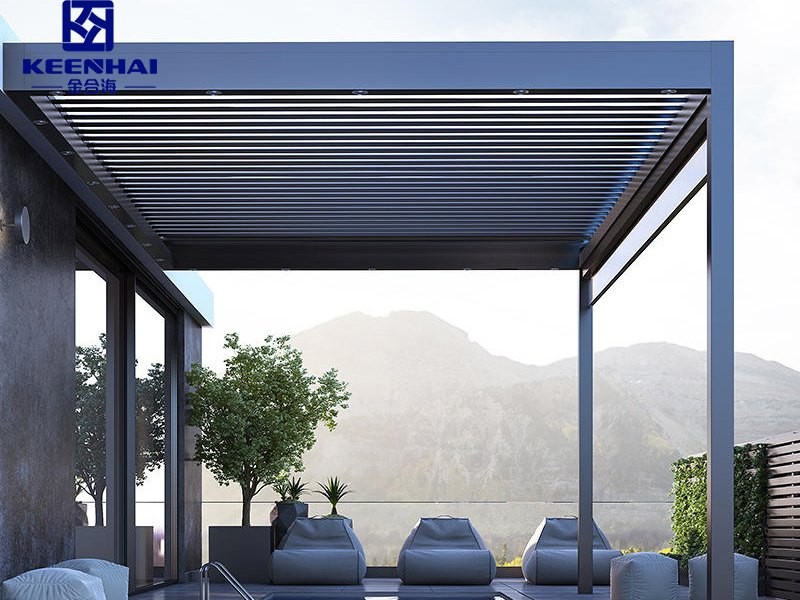
2. Main Advantages of Motorized Louvered Pergolas
2.1 Adjustable Shade and Ventilation Control
One of the biggest advantages of a motorized louvered pergola system is its precise control over light and airflow. With a simple remote or app, the aluminum louvers can rotate anywhere between 0° and 150°, allowing users to customize the atmosphere in seconds. At 0°, the blades form a waterproof seal; at 45°, they allow partial sunlight with gentle ventilation; at 90°, they create a fully open roof effect ideal for morning gatherings or evening dining.
This flexibility turns outdoor areas like restaurant terraces, villa courtyards, and residential patios into comfortable, year-round living spaces. Compared with fixed-roof designs, a motorized version maintains natural ventilation while keeping UV exposure under control — a feature particularly valuable in tropical or coastal climates.
For instance, high-end systems such as the Louvres Pergola are designed to automatically adjust their louvers using built-in sensors that react to temperature and sunlight intensity, ensuring optimal comfort throughout the day. This feature makes it not just an outdoor structure but a responsive, climate-adaptive shading solution.
| Function | Motorized Louvered Pergola | Traditional Fixed Pergola |
|---|---|---|
| Shade Adjustment | 0°–150° automatic tilt | None |
| Ventilation | Controllable airflow | Static, no airflow |
| UV Protection | Variable | Constant exposure |
| Comfort Level | Adjustable with weather | Limited |
| Energy Efficiency | Reduces indoor cooling load | No impact |
2.2 Weather Resistance and Durability
Durability is where aluminum motorized pergolas truly stand out. The entire structure is built from 6063-T5 aluminum alloy, known for its exceptional corrosion resistance and structural rigidity. Every component is powder-coated with AkzoNobel exterior-grade paint, ensuring color stability and surface protection even after 10 years of UV exposure or coastal humidity.
The roof’s interlocking blades are designed with EPDM waterproof gaskets, which seal automatically when the louvers close. Combined with the integrated gutter system inside each post, rainwater is redirected away from the covered area through hidden drainage channels, keeping furniture and flooring completely dry.
In real-world applications, these systems are used in hotel pool lounges, beachside restaurants, and luxury rooftop bars, where weather unpredictability can ruin a guest experience. With a wind resistance up to 110 km/h and snow load capacity around 80 kg/m², this structure outperforms most standard outdoor shade systems.
The Aluminum motorized pergola by Keenhai Pergola includes internal drainage and reinforced beams, which make it suitable for both residential and light commercial use — an important factor when designing long-term outdoor investments.
2.3 Smart Control and Automation Features
A major reason homeowners and architects prefer a motorized louver pergola over manual systems is its intelligent automation. Modern models integrate IoT smart home technology, allowing users to control the pergola via smartphone apps, voice commands, or weather sensors.
Here’s how a smart pergola typically operates:
-
User Command Input – Adjust louver angles or lighting through app or remote.
-
Sensor Activation – Rain or wind sensors automatically close or open louvers for protection.
-
Lighting & Accessories Sync – LED strips, heaters, and side screens operate in sync with louver position.
For example, an Aluminum electric pergola can be fully integrated into Google Home or Alexa, providing hands-free operation. Some models even have preset “comfort modes” that remember user preferences — for instance, a “sunset dinner mode” automatically tilts the louvers 30° and dims the ambient lights for an elegant dining ambiance.
This level of automation transforms patios and restaurant courtyards into intelligent outdoor environments, bridging architecture and technology seamlessly.
2.4 Modern Design Appeal and Property Value Boost
Beyond its engineering, a motorized aluminum pergola also functions as a strong design statement. Its clean lines, hidden fasteners, and architectural-grade finish complement modern homes, luxury villas, and commercial facades. Available in custom RAL colors, woodgrain textures, or matte metallic finishes, these pergolas fit effortlessly into contemporary landscape designs.
From an investment perspective, installing a smart louver roof system can increase property value by 8–15%, particularly in regions with high demand for outdoor living upgrades. Developers and designers use them in boutique hotels, high-end restaurants, and private garden lounges to create visually cohesive outdoor experiences that align with modern architecture trends.
When paired with retractable glass walls or zip screens, the structure becomes a four-season outdoor room, enhancing both lifestyle quality and real estate market appeal. Many Keenhai Pergola projects in the Middle East and Europe have demonstrated how modern aluminum designs significantly enhance outdoor luxury perception while maintaining practicality.
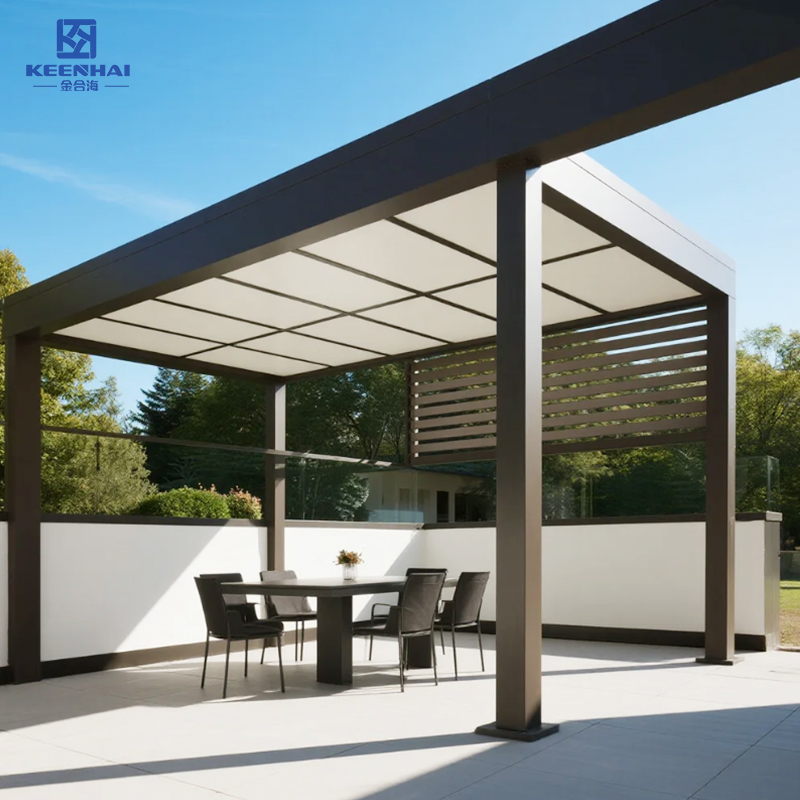
3.Common Drawbacks to Consider
3.1Higher Upfront Cost Compared to Manual Models
Investing in a motorized pergola system generally requires a significant upfront budget. Premium aluminum and automation components, such as remote-controlled louver blades and integrated weather sensors, add to the initial expense. For example, a residential patio in Miami using a fully automated louvered pergola reported installation costs nearly 40% higher than a traditional manual model. However, homeowners appreciated the convenience and flexibility, particularly during sudden rain or strong sunlight, which justified the long-term value.
Electrical Maintenance and Potential Repairs
Unlike manual structures, aluminum electric pergolas rely on motors, wiring, and control units. Annual inspections become essential to ensure the automation system operates smoothly. Common maintenance tasks include:
-
Checking and tightening electrical connections.
-
Lubricating moving parts in the motor and track.
-
Testing smart sensors for proper response to sunlight and rainfall.
Neglecting these steps can lead to motor failure or intermittent operation, particularly in coastal areas where salt corrosion accelerates wear. Commercial rooftop terraces often schedule maintenance every 6–12 months to avoid costly downtime.
3.2Installation Complexity and Space Requirements
A motorized louvered pergola demands precise leveling and secure anchoring, especially for larger spans. Unlike a simple manual structure, it may require reinforced beams, concrete footings, or professional electrical wiring. For example, a hotel poolside in Dubai installed a 20×15 ft aluminum motorized shade structure. The process involved:
-
Structural assessment by a civil engineer.
-
Custom fabrication of aluminum beams to accommodate motorized louvers.
-
Coordination with an electrician for power integration and sensor setup.
Such complexity can extend installation timelines and increase labor costs compared to manual models. Additionally, the pergola needs enough overhead clearance for louver rotation and smooth operation, which can limit placement options in tightly built outdoor areas.
3.3Dependence on Power Supply and Automation Controls
Motorized pergolas cannot function without electricity. During power outages or smart controller malfunctions, louvers remain fixed, limiting sun and rain protection. For rooftop cafés or backyard patios in regions prone to outages, this means relying on manual overrides or temporary shading solutions. The good news is that modern systems often include a backup manual crank for emergencies, but it still reduces the convenience that initially justified the investment.
Potential Noise During Operation
While most aluminum motorized pergolas operate quietly, larger louver spans or older motors can generate noticeable sounds when opening or closing. Residential users installing near bedrooms or quiet garden areas may find this disruptive, particularly early in the morning or late at night. Upgrading to premium low-decibel motors and ensuring proper motor alignment can mitigate noise, but it adds to overall costs.
3.4Weather Limitations for Extreme Conditions
Even with durable aluminum blades, motorized systems have operational limits. High wind or heavy snowfall can prevent louvers from opening or closing safely. For example, a suburban café in Chicago had to lock the louvers during a winter storm to prevent motor strain and structural damage. While sensors help automatically protect the system, extreme weather events may temporarily reduce functionality, unlike permanent roof structures.
4.Motorized vs Manual Louvered Pergola: Key Differences
4.1Functionality and Ease of Use
Motorized louvered pergolas provide instant shade and ventilation control at the push of a button or via smart device. Automated systems can tilt louvers to exact angles, respond to sunlight intensity, or close automatically when rain is detected. For example, a rooftop terrace in Los Angeles with a 10×12 ft aluminum motorized shade structure allows staff to adjust coverage in under 10 seconds, compared to manual pergolas, which require physically rotating louvers or repositioning panels, taking several minutes per adjustment. In outdoor dining spaces, this translates into more consistent comfort for guests and fewer disruptions during service.
4.2Price and Long-Term Value
Motorized systems carry a higher upfront investment, often ranging from $6,000–$12,000 for mid-sized residential units, while manual models of the same footprint may cost $2,500–$5,000. However, when considering long-term usability and protection of furniture, motorized pergolas can offset costs by reducing sun damage to patio furnishings and minimizing labor for manual adjustment.
| Feature | Motorized Louvered Pergola | Manual Louvered Pergola |
|---|---|---|
| Upfront Cost | $6,000–$12,000 | $2,500–$5,000 |
| Adjustment Speed | Seconds via remote/smart device | Minutes by hand |
| Automatic Rain/Shade Response | Yes | No |
| Long-Term Furniture Protection | High | Moderate |
| Installation Complexity | High | Low |
This table highlights that while manual models save money initially, motorized structures deliver measurable value in convenience, protection, and automation features.
4.3Maintenance and Lifespan
Motorized pergolas require regular electrical inspections, motor lubrication, and occasional sensor recalibration. A case study from a Miami beachfront villa showed that biannual maintenance kept a 12×14 ft system operating at peak efficiency for over 12 years. Manual pergolas, in contrast, primarily need cleaning and occasional hardware checks, allowing for lower maintenance costs but more frequent user intervention. Both systems rely on durable aluminum and corrosion-resistant finishes, but motorized units may need component replacements sooner if automation parts are exposed to extreme weather, while manual models generally last 15–20 years with minimal upkeep.
Overall, the decision comes down to trade-offs between convenience, automation, and upfront investment versus simplicity and lower initial cost, with motorized pergolas clearly favored for high-traffic or premium outdoor spaces where user experience and efficiency matter.
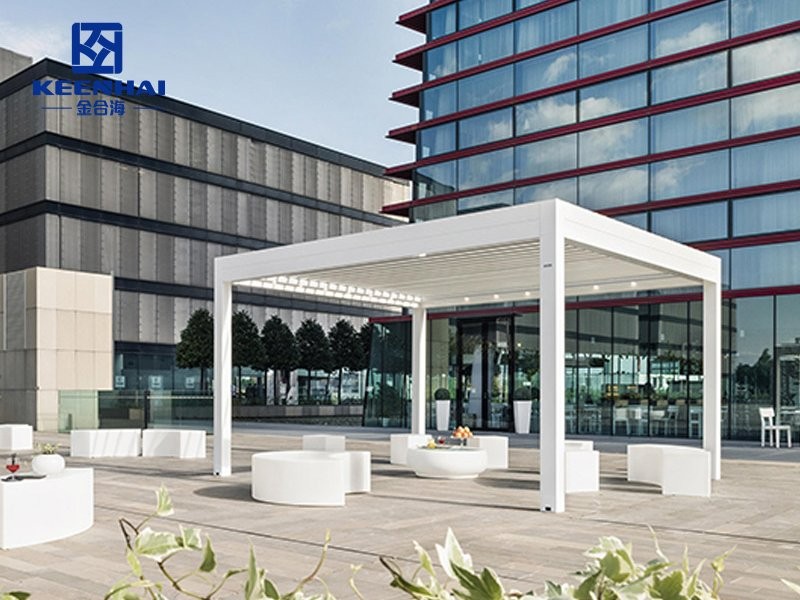
5.Motorized Louvered Pergola Price Breakdown
5.1Average Cost by Size and Material
The price of a motorized louvered pergola largely depends on size and materials. For residential setups:
-
Small units (8×8 ft): $3,500–$5,000, typically using standard aluminum louvers with basic powder coating.
-
Medium units (10×12 ft): $6,000–$9,000, often featuring corrosion-resistant aluminum, wider blades, and heavier-duty framing.
-
Large units (12×16 ft or larger): $10,000–$15,000+, incorporating premium aluminum, reinforced beams, and advanced weatherproofing.
For example, a luxury villa in Scottsdale installed a 14×16 ft aluminum motorized pergola with 3.5-inch louvers and powder-coated finish for $13,200. The structure provides full coverage over a poolside patio and withstands high desert winds.
5.2Additional Expenses: Motor System, Lighting, Sensors
Beyond materials, automation components significantly affect cost. Common add-ons include:
-
Motorized Louver System: $1,200–$2,500 depending on torque capacity and brand.
-
Smart Controls & Remote Operation: $300–$700 for app integration or wireless remotes.
-
Lighting Integration: $150–$500 for LED strips or integrated recessed lights.
-
Weather Sensors: $200–$400 for sunlight, wind, or rain sensors that automate louver adjustment.
These elements make a medium-size pergola system easily reach $8,000–$10,000, but they provide automated protection against sun, rain, and wind, reducing manual adjustments and potential damage to outdoor furniture.
5.3Installation Fees and Professional Labor
Installing a motorized louvered pergola is more complex than a manual model, requiring both structural and electrical expertise. Typical costs include:
-
Basic installation: $800–$1,500 for small units.
-
Full professional installation: $2,000–$4,000 for medium to large units, including footings, leveling, wiring, and sensor calibration.
-
Custom integration: $500–$1,000 for specialized features like ceiling-mounted LED lights or smart home integration.
A Miami rooftop bar reported $3,200 labor cost for a 10×14 ft motorized pergola, with technicians spending two full days on leveling, anchoring, and wiring. While this adds to upfront expenses, professional installation ensures smooth louver operation, reduces long-term maintenance, and protects the warranty.